

Maarten Christenhusz
Postdoctoral Research Fellow in quantum turbulence
UQ BEC Laboratory
Working in ultracold atomic gases, I study quantum fluid flow from vortices to turbulence, exploring quantum turbulence and its connections to classical fluid dynamics.
about me
I am a physicist working across experiment and theory using quantum fluids to understand fluid dynamics across scales.

I work with Bose–Einstein condensates as a platform for studying superfluid hydrodynamics and turbulence, combining experimental work with numerical simulations and theoretical modelling. These systems provide a controlled setting to explore quantised vortices, dissipation, and flow instabilities, and to connect them with analogous behaviour in classical fluid dynamics.
Much of my research is driven by the question of how universal features of flow emerge across very different physical systems. I develop and use both experiments and simulations to understand how structure, transport, and turbulence arise and interact in classical and quantum fluids. Alongside this, I am passionate about initiatives focused on improving access, belonging, and retention within physics, supporting a more diverse and sustainable research community.
Research Interests
Exploring the physics of quantum fluids through experiment and theory.

Turbulence
Turbulence is a universal phenomenon spanning systems from planetary atmospheres to quantum fluids. We study how vortices interact, organise, and transfer energy across different length scales in both classical and superfluid environments.
Ultracold Bose gases
Ultracold Bose gases provide a highly controllable platform for exploring quantum fluids, where interactions and dynamics can be controlled at the atomic scale. We create and manipulate Bose-Einstein condensates to study collective phenomena, quantum dynamics, and applications in precision sensing.

Quantum Vortex Dynamics
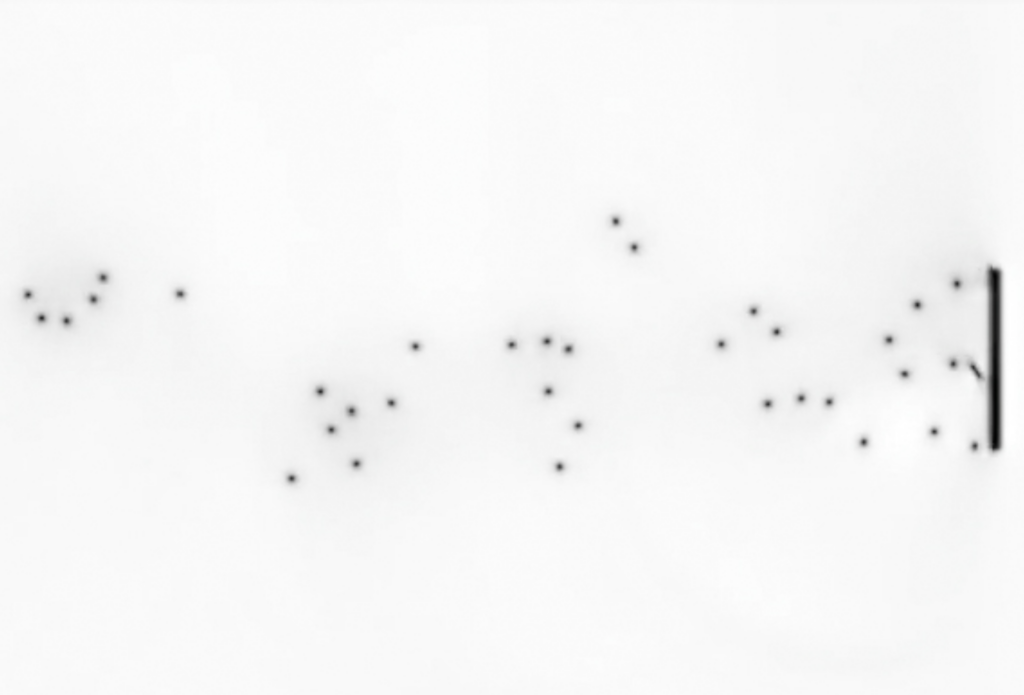
Vortices are the fundamental excitations that govern the behaviour of superfluids. We investigate how quantum vortices are created, interact, and drive the transition from smooth flow to dissipation.
Recent highlight
Featured work from my research.

Universal Drag Law in a Model of Superflow
Published in Physical Review Letters
We showed that the same scaling laws that allow wind tunnels to predict flow around objects also apply to superfluid flow.